


A game room has to do several jobs at once. Someone needs room to draw a cue back; a projector screen needs to stay out of daylight; the people who are not playing need somewhere to sit with a view of both the table and the screen. Whether the space is a finished basement, a converted garage or a spare attic landing, most of the planning comes down to what stands where, and how the cables and the heat get out.
How Do You Design a Modern Game Room That Balances Analog and Digital Play?
Divide the floor into zones that keep light and noise apart while the room still reads as one space. Active sports, card and board play, and digital screens each want their own sector; put them in the same square footage and they interfere.
The usual failure is a single undivided room — a pool table under one lamp, a console or two on the only screen. It is worth thinking instead about what each kind of play actually needs. If you play interactive titles or slots such as free pokies Aristocrat on a tablet, that belongs on a lounge edge of the room, on upholstered seating with charging points within reach, well away from the area where people are swinging cues.
Applying the Analog-Digital Convergence Matrix to Divide Your Floorplan
The Analog-Digital Convergence Matrix (ADCM) is a way of sorting the layout into three zones:
- The Social Centerpiece (Analog Zone): Pool tables, shuffleboards or foosball units set at least 5 feet from walls and perimeter furniture, so a full cue stroke clears.
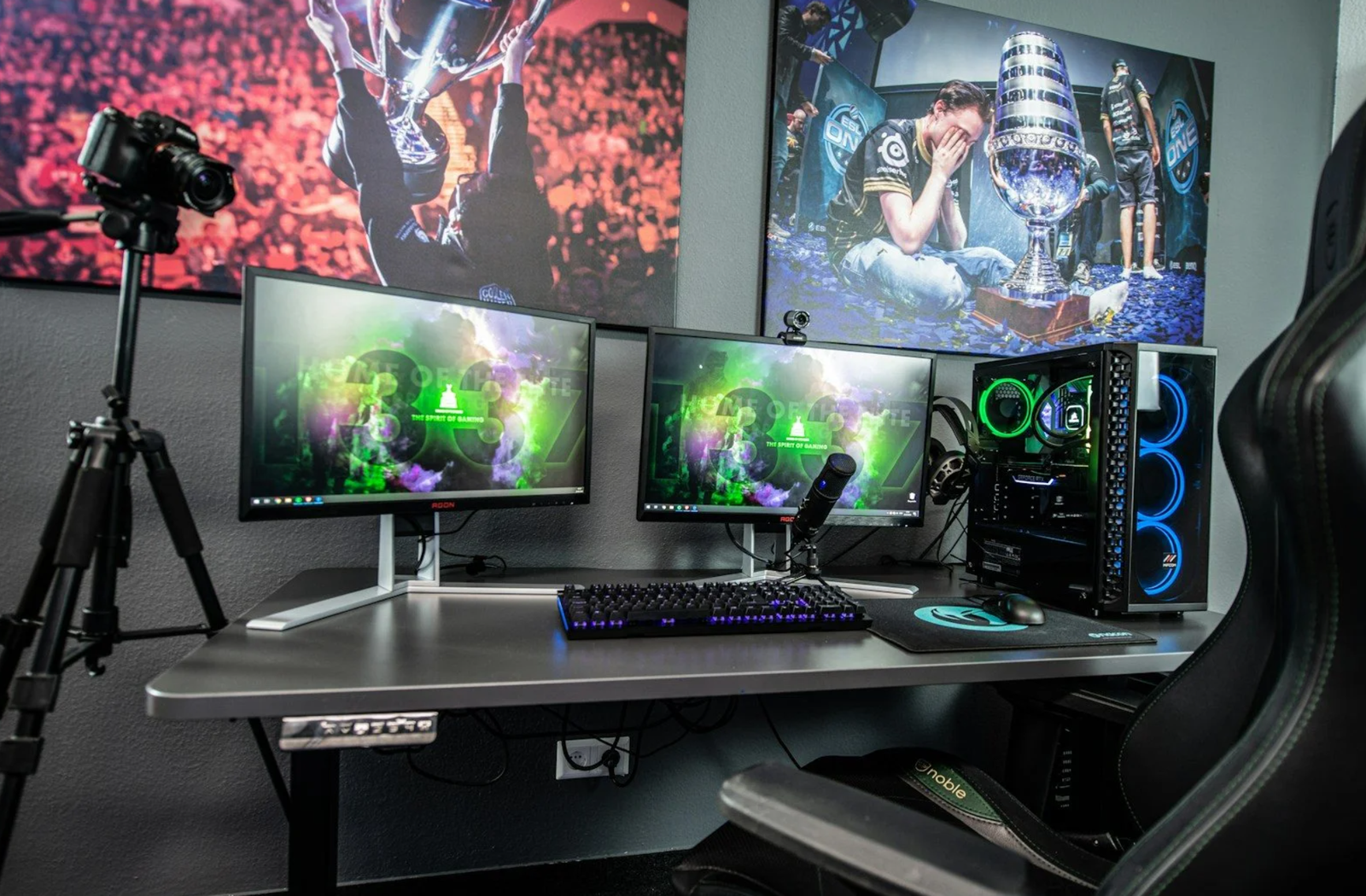
- The Digital Enclosure (Screen Zone): 4K laser projectors, driving simulators and consoles kept away from natural light, with matte finishes on the nearby surfaces to cut glare.
- The Lounge Periphery (Transition Zone): Cocktail seating, a dry bar or daybeds placed so spectators can see both the board game and the display.
What Are the Best Custom and Convertible Gaming Tables for High-End Spaces?
Bespoke multi-functional tables, in solid hardwoods, with concealed cavities for equipment and a convertible top. Makers such as Riley England, Coley Home and Theodore Alexander build pieces that serve as a dining surface and then, with the top changed, as a playing surface.
What separates these from cheaper transforming tables is the mechanism. Inexpensive models develop warped seams and legs that shift under weight, which is enough to spoil a competitive game. Heirloom work uses solid burl, high-gloss lacquer and steel-reinforced slate beds. The practical gain of bespoke fabrication is the flush, felt-lined compartment under the top, sized for billiard balls, cues, cards and ping-pong paddles, so none of it has to live on a shelf.
Dual-Purpose Dining-to-Billiards vs. Dedicated Bespoke Card Tables
The choice comes down to floor area and how often each activity happens:
- Convertible Dining/Billiard Tables: Make a small room work harder, but they need chair-height planning — a billiard surface sits about 32 inches high against roughly 30 for a dining table.
- Dedicated Card and Chess Tables: Give a proper salon arrangement — recessed drink holders, leather-wrapped armrests, baize felt — at the cost of floor space committed to one activity.
How Can You Integrate Consoles and Displays Without Cable Clutter or Overheating?
Route signal cable through low-voltage in-wall conduit and put the hardware in cabinetry that is ventilated rather than sealed. Power bricks, HDMI switches and media hubs hidden inside joinery keep the room minimal, but only if the air around them moves.
This is the part most often left until the end, and the electronics suffer for it. Consoles and AV receivers produce a good deal of heat. Sealed inside a credenza with no airflow, they throttle, and in bad cases the components fail within months.
Low-Voltage In-Wall Routing and Active Cabinet Ventilation
Two pieces of infrastructure do the work:
- Invisible Signal Routing: Brush-plate conduit in the wall, carrying the run from wall-mounted displays and ultra-short-throw projectors back to a central media hub, so no cord hangs in view.
- Active Airflow Management: Temperature-activated USB exhaust fans rated below 20 dBA, fitted into storage credenzas to push hot air out and draw ambient air in — typically 15 to 25 degrees cooler inside the cabinet.
What Materials and Lighting Deliver Optimal Acoustics and Atmosphere?
Layer sound-dampening wall panels with tunable smart lighting on separate circuits. The panels stop the echo; the lighting lets the room move between bright working light and a dimmer backdrop without anyone repositioning a lamp.
Bare drywall and sealed concrete bounce sound back, and a tournament or a ping-pong rally in such a room becomes hard to be in. Studio foam is not the only answer. Acoustic 3D wall panels in fluted oak, walnut slats or bamboo fibre absorb sound and lift the room’s Sound Transmission Class (STC) rating, taking the edge off mid- and high-frequency reverb, and they are finish-grade on the wall.
Balancing Decorative 3D Acoustic Slats with Tunable Smart Scene Lighting
High-CRI smart LED fixtures above the tables give even, shadow-free light for poker, chess or billiards. From a wall keypad or an app you can drop the main lights and bring up RGB backlighting set behind the acoustic panels, and the room goes from a family games room to something closer to a private bar — the same furniture, a different evening.
